Tehran hosts 40th Islamic Unity Conference amid war on Iran
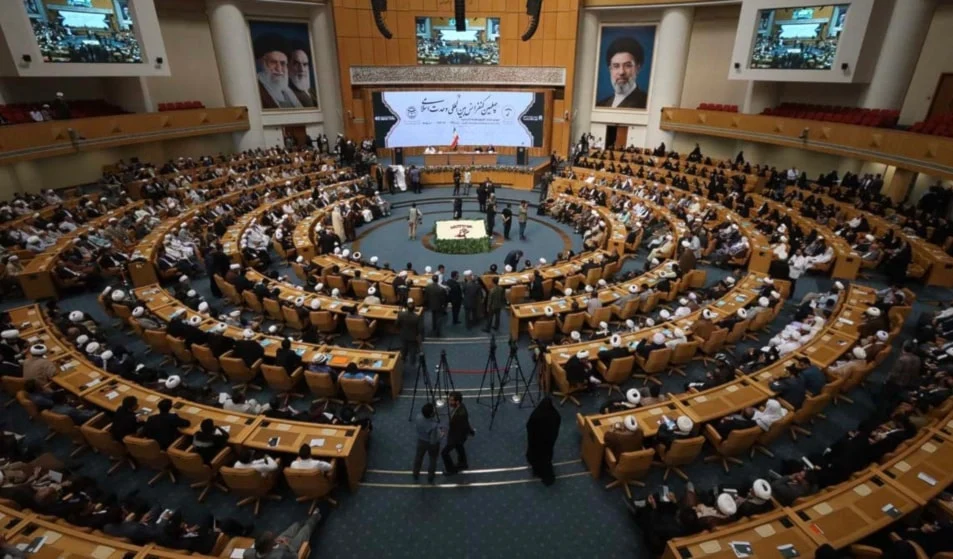
The 40th International Islamic Unity Conference opened in Tehran on Thursday, bringing together around 600 participants from 40 countries, including Iraq, Pakistan, Türkiye, Lebanon, Afghanistan, and the Gulf states, under the theme "Islamic unity in the thought of the martyred Imam".
The conference is being held amid the ongoing war on Iran, with speakers emphasizing Islamic solidarity, cooperation, sovereignty, and the need for greater coordination among Muslim countries in the face of regional and global challenges.
Pezeshkian calls for unity among Islamic nations
Iranian President Masoud Pezeshkian said differences within the Islamic world should not become a source of division, stressing that the conference draws on the intellectual legacy of the martyred Imam. "The martyred Imam always called for differences not to lead to division, and this conference was built on this intellectual legacy", he said.
"We are meeting under exceptional circumstances at this conference, which is rooted in the thought of the martyred Imam, Sayyed Khamenei... We must not accept threats to the security of an Islamic state or threats to the security of a Muslim people", Pezeshkian added.
He described Islamic unity as a commitment to defending justice and standing with those facing oppression, while highlighting the strategic position of the Islamic world at the intersection of civilizations, cultures, and global economic routes.
"Unity means that differences must not turn us into enemies, so Shiites remain Shiites and Sunnis remain Sunnis", he said.
Pezeshkian also pointed to the limited level of economic integration among Islamic countries, noting that trade between them accounts for no more than 19%. "Why do we not unite and support our Islamic nation? And why are the lands of our nation the center of wars around the world?" he asked.
He argued that the Islamic world's challenge is not a shortage of resources or capabilities, but the failure to channel them into cooperation.
On the war on Iran
Pezeshkian also used his address to discuss the war on Iran, saying Tehran had been engaged in negotiations when the aggression began.
"Negotiations were underway when the war against us began, and a peaceful solution was being worked out at the table... We did not start the war", he said, stressing that Iran's response was rooted in its right to defend its sovereignty and independence rather than hostility toward neighboring or Islamic states.
"We are defending our sovereignty and independence, and this is a legitimate right. It does not mean hostility toward Islamic states or neighboring countries. Neighboring countries must not be partners in aggression against us", he said.
Pezeshkian further underscored the importance of solidarity among Muslim countries, saying, "Unity is more obligatory than prayer and fasting. If Iran stands against the oppressor, this is not a favor but a duty".
"If humanity is not respected, we will find ourselves facing another version of the eras of ignorance. This is what we are witnessing today, where progress is being used to kill people", he added.
Shahriari urges solidarity with Iran
Sheikh Hamid Shahriari, secretary-general of the World Forum for Proximity of Islamic Schools of Thought, said the war on Iran was continuing because Iran represented a model within the Islamic world.
"The war on Iran continues because Iran is a model to be emulated in the Islamic world", Shahriari said, emphasizing that Iranian institutions had been targeted because they represent a civilization that, in his view, threatens Western interests in the region.
Shahriari said Iran was confronting "arrogant capitalism and American hegemony", while praising the country's youth and armed forces for demonstrating Iran's capabilities.
"This war is not only about resources; it is a confrontation between Islamic civilization and Western barbarism", Shahriari added, saying that Iran's strength had also been demonstrated through attacks on US bases.
"In this battle with the enemy, we received messages of brotherhood from the Islamic world, which reaffirmed the importance of Islamic unity", he said.
Shahriari said the Iranian leadership's message and the directive of the martyred Leader Sayyed Ali Khamenei have consistently centered on rapprochement and unity among Muslim countries. He also thanked "all Arab and Islamic countries working toward rapprochement, unity, and solidarity".
Lebanese scholar calls for Islamic cooperation
Meanwhile, Sheikh Ali al-Khatib, deputy head of Lebanon's Supreme Islamic Shiite Council, said the Islamic world was confronting unprecedented challenges, asserting that Iran is standing against "the tyrants of the world" while drawing on Islamic civilizational principles.
Al-Khatib called for broader support for Iran and greater dialogue among Islamic countries, while emphasizing respect for the distinct characteristics of each side.
He urged "all countries and scholars to stand in solidarity with Iran in confronting the enemies, on the basis that the Islamic nation is one body", and called for "intra-Islamic dialogue to strengthen unity and rapprochement while respecting the particularities of each side", stressing that "cooperation among Islamic countries is the only path to confronting the squandering of the nation's resources".
Al-Khatib also warned about the growing military application of emerging technologies. "Militarizing technology and artificial intelligence has today turned into a destructive course for humanity", he said.
What the Islamic Unity Conference will discuss
The conference is being held in a decentralized format and will continue through Sunday, August 30, 2026. Sessions are taking place in Tehran, as well as the cities of Qom and Mashhad, while four specialized sessions are being held in the provinces of West Azerbaijan, Kurdistan, Golestan, and Razavi Khorasan.
The conference's agenda covers the concept of unity, the Islamic nation, and modern Islamic civilization in the teachings of the martyred Leader, alongside the role of shared Islamic principles in shaping a common identity.
Other discussions will address challenges facing Islamic unity in the contemporary era and the role of scholars and religious institutions in preserving Islamic identity.
Economic cooperation is also among the central themes, with sessions examining how Islamic unity can strengthen the resistance economy and cooperation between Muslim countries.
The conference will further examine the teachings of the martyred Imam concerning peace, security, strength, and dignity, as well as politics and governance within the Islamic nation.
Its agenda also includes discussions on war and peace in the Prophet's biography, the balance between defense and reconciliation, and the issues of Palestine and Lebanon in the thought of the martyred Imam.